


Hey there, folks! As a supplier of 20 PSI propane regulators, I often get asked about the pressure stability of these regulators over time. So, I thought I'd take a few minutes to chat about it and share some insights.
First off, let's talk about what a propane regulator does. In simple terms, a propane regulator is a device that controls the pressure of propane gas flowing from a propane tank to an appliance. The 20 PSI propane regulator, as the name suggests, is designed to maintain an output pressure of 20 pounds per square inch (PSI). This consistent pressure is crucial for the proper functioning of propane - powered appliances, whether it's a grill, a heater, or an RV stove.
One of the key factors that affects the pressure stability of a 20 PSI propane regulator over time is the quality of its construction. At our company, we use high - grade materials in the manufacturing of our regulators. The diaphragm, which is a vital component in regulating pressure, is made from top - notch elastomers that can withstand the constant stress and chemical exposure from propane. This means that even after extended use, the diaphragm retains its flexibility and integrity, ensuring a stable pressure output.
Another important aspect is the design of the regulator. Our 20 PSI propane regulators are engineered with precision. The internal valve mechanism is carefully calibrated to open and close in response to changes in the gas flow and pressure. When the demand for propane from the appliance increases, the valve opens a bit wider to allow more gas to flow at the set 20 PSI. Conversely, when the demand decreases, the valve closes slightly to maintain the correct pressure. This dynamic adjustment is what keeps the pressure stable.
However, like any mechanical device, a propane regulator can experience wear and tear over time. Environmental factors play a significant role here. If the regulator is exposed to extreme temperatures, high humidity, or corrosive substances, it can degrade faster. For example, in a coastal area where there's a lot of salt in the air, the metal parts of the regulator can corrode. This corrosion can affect the movement of the internal components, leading to pressure fluctuations.
Regular maintenance is also essential for ensuring long - term pressure stability. We recommend that users inspect their 20 PSI propane regulators periodically. This includes checking for any signs of damage, such as cracks in the housing or leaks around the connections. A simple soapy water test can be used to detect leaks. If you see bubbles forming when you apply soapy water to the connections, it's a sign that there's a leak, and the regulator should be serviced or replaced.
Now, let's compare our 20 PSI propane regulator with some other options in the market. If you're looking for higher pressure, we also offer a 30 PSI RV Propane Regulator. This is great for applications that require a bit more oomph, like some industrial - grade propane - powered equipment. On the other hand, if you need a lower pressure, our 10 PSI Propane Regulator is a perfect choice for small - scale propane appliances. And for those who need even greater flexibility in pressure control, we have the High Pressure Propane Gas Regulator, which can handle a wide range of pressures.

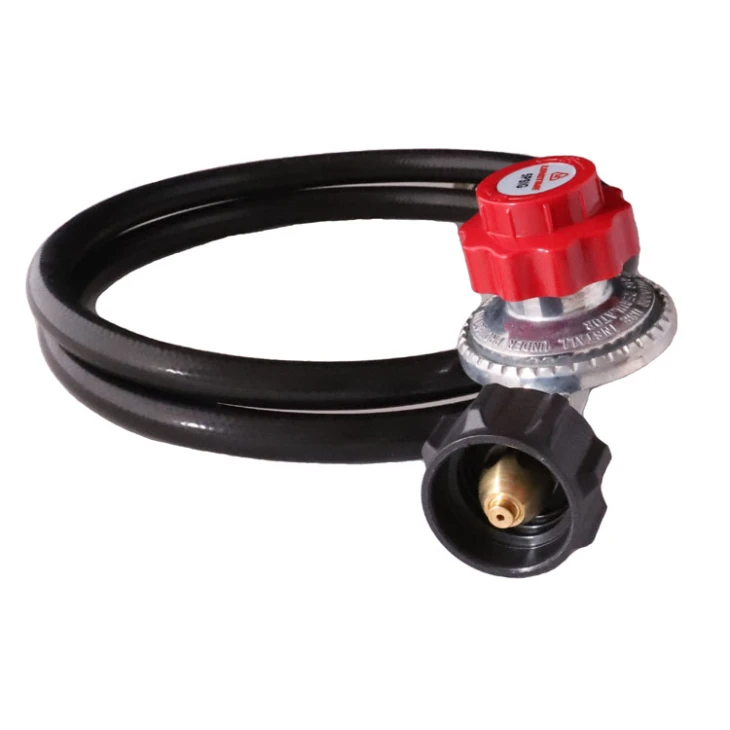
Over time, we've conducted numerous tests on our 20 PSI propane regulators. We simulate real - world conditions, including continuous use, temperature variations, and different levels of gas flow. These tests have shown that our regulators can maintain a pressure stability within a very narrow margin. In fact, in a 100 - hour continuous use test, the pressure output of our 20 PSI propane regulator only deviated by less than ±0.5 PSI, which is an excellent performance in the industry.
But don't just take my word for it. Many of our customers have shared their positive experiences. One customer, who uses our regulator for his outdoor grill, said that he's been using it for over two years, and the grill has been working flawlessly. The flame is consistent, and he never has to worry about uneven cooking due to pressure issues.
If you're in the market for a reliable 20 PSI propane regulator, or any of our other high - quality propane regulators, I'd encourage you to reach out to us for a purchase and negotiation. We're here to help you find the right product for your needs and offer the best possible price. Whether you're a homeowner, a business owner, or an RV enthusiast, we've got the propane regulator solution for you.
In conclusion, the pressure stability of a 20 PSI propane regulator over time depends on factors like construction quality, design, environmental conditions, and maintenance. At our place, we strive to provide regulators that offer long - lasting and stable pressure performance. So, if you have any questions or are interested in our products, don't hesitate to get in touch.
References
General knowledge of propane regulator technology and industry standards.
Internal test reports of our 20 PSI propane regulators.


