


As a supplier of natural gas regulators, I often encounter customers who are confused about the differences between direct - acting and pilot - operated natural gas regulators. In this blog, I'll delve into these differences to help you make an informed decision when choosing the right regulator for your needs.
Basic Working Principles
Let's start by understanding the fundamental working principles of these two types of regulators.
Direct - Acting Natural Gas Regulators
Direct - acting regulators are relatively simple in design. They operate based on the balance between the force exerted by a spring and the pressure of the gas. The spring is pre - set to a certain tension, which determines the outlet pressure. When the gas enters the regulator, it exerts a force on a diaphragm. If the gas pressure is higher than the force set by the spring, the diaphragm moves, and a valve connected to it closes slightly to reduce the flow of gas and maintain the desired outlet pressure. Conversely, if the gas pressure is lower, the valve opens wider.
These regulators are straightforward and cost - effective. They are often used in applications where the flow rate is relatively low and the pressure requirements are not extremely precise. For example, in small residential appliances like a Gas Regulator For BBQ, a direct - acting regulator can effectively control the gas pressure to ensure a stable flame for cooking.
Pilot - Operated Natural Gas Regulators
Pilot - operated regulators, on the other hand, are more complex but offer greater precision and flexibility. They consist of two main parts: a pilot valve and a main valve. The pilot valve is a small, direct - acting regulator that controls the pressure in a control chamber above the main valve.
The pilot valve senses the outlet pressure and adjusts the pressure in the control chamber accordingly. When the outlet pressure changes, the pilot valve modifies the pressure in the control chamber, which then causes the main valve to open or close. This design allows the regulator to respond more quickly to changes in flow rate and pressure.
Pilot - operated regulators are suitable for applications with high flow rates and strict pressure control requirements. In industrial settings where large amounts of natural gas are used, such as in power plants or large manufacturing facilities, pilot - operated regulators can ensure a consistent and accurate gas pressure, which is crucial for the proper operation of equipment.
Performance Characteristics
Pressure Regulation Accuracy
One of the key differences between direct - acting and pilot - operated regulators lies in their pressure regulation accuracy.
Direct - acting regulators typically have a lower level of accuracy. The spring in a direct - acting regulator can be affected by factors such as temperature changes and mechanical wear over time. As a result, the outlet pressure may fluctuate slightly, especially when there are significant changes in the inlet pressure or flow rate.
Pilot - operated regulators, however, offer much higher accuracy. The use of a pilot valve allows for more precise control of the main valve, and they can maintain a more stable outlet pressure even under varying operating conditions. This makes them ideal for applications where a constant and accurate gas pressure is essential.
Response Time
Response time is another important performance characteristic.
Direct - acting regulators have a relatively slow response time. Since they rely on the movement of a diaphragm and a spring, it takes some time for the regulator to adjust to changes in pressure or flow rate. This can be a limitation in applications where rapid changes in gas demand occur.
Pilot - operated regulators have a much faster response time. The pilot valve can quickly sense changes in the outlet pressure and adjust the main valve accordingly. This enables them to respond almost instantaneously to fluctuations in gas flow, ensuring a continuous and stable supply of gas.
Flow Capacity
Flow capacity is also a significant factor to consider.
Direct - acting regulators generally have a lower flow capacity. Their design is not well - suited for handling large volumes of gas. As the flow rate increases, the performance of a direct - acting regulator may deteriorate, and it may not be able to maintain the desired outlet pressure.
Pilot - operated regulators, on the other hand, can handle much higher flow rates. Their design allows them to control large amounts of gas with ease, making them suitable for applications with high - volume gas consumption, such as in industrial pipelines or large commercial kitchens.
Application Scenarios
The choice between a direct - acting and a pilot - operated regulator depends largely on the specific application.
Residential Applications
In residential settings, direct - acting regulators are commonly used. For example, in a home heating system or a Jumbo Low Pressure Regulator for a small - scale gas - powered generator, the relatively low flow rate and less stringent pressure requirements make direct - acting regulators a cost - effective choice. They are easy to install and maintain, and they can provide sufficient gas pressure control for everyday household needs.
Commercial and Industrial Applications
Commercial and industrial applications often require the use of pilot - operated regulators. In a large restaurant kitchen, where multiple gas appliances are used simultaneously, a pilot - operated regulator can ensure a stable gas supply to all appliances, regardless of the varying demand. Similarly, in an industrial plant, where precise gas pressure is crucial for the production process, a pilot - operated regulator can meet the high - flow and high - accuracy requirements.
Another example is in a Double Propane Tank Regulator system. If the system is used in a commercial or industrial setting with high gas consumption, a pilot - operated regulator may be necessary to handle the large flow rate and maintain accurate pressure control.
Maintenance and Cost
Maintenance
Maintenance requirements also differ between direct - acting and pilot - operated regulators.
Direct - acting regulators are relatively easy to maintain. They have fewer components, and the diaphragm and spring are the main parts that may need to be inspected and replaced over time. Regular maintenance typically involves checking for leaks, cleaning the valve, and adjusting the spring tension if necessary.
Pilot - operated regulators are more complex and require more comprehensive maintenance. The pilot valve and the main valve need to be inspected regularly, and the control chamber may need to be cleaned to ensure proper operation. Additionally, the calibration of the pilot valve is crucial for maintaining accurate pressure control, which may require more technical expertise.
Cost
Cost is an important consideration for many customers.
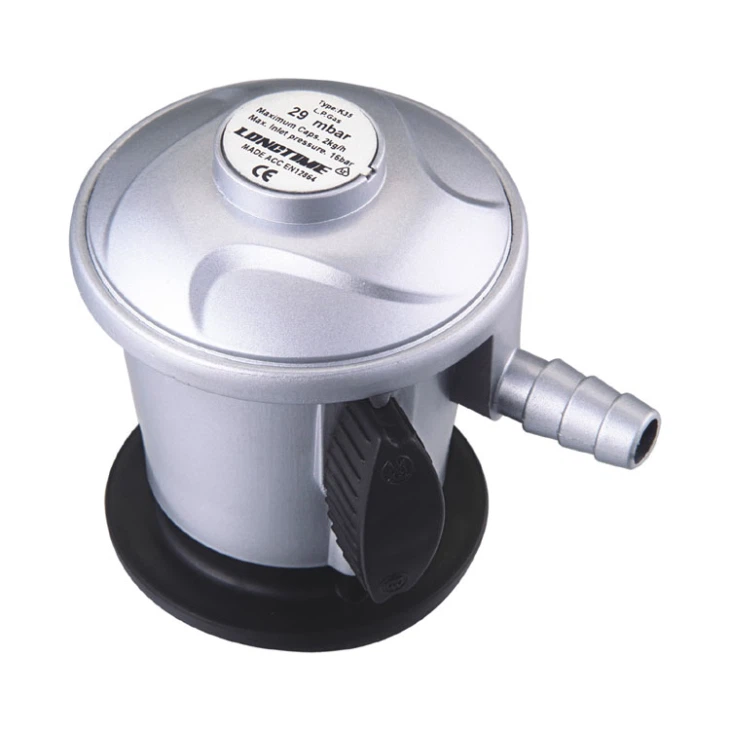

Direct - acting regulators are generally less expensive. Their simple design and fewer components result in lower manufacturing costs, making them an attractive option for budget - conscious consumers.
Pilot - operated regulators, due to their complexity and higher performance capabilities, are more expensive. However, in applications where high accuracy, fast response time, and high flow capacity are required, the additional cost is often justified by the improved performance and reliability.
Conclusion
In summary, direct - acting and pilot - operated natural gas regulators have distinct differences in their working principles, performance characteristics, application scenarios, maintenance requirements, and costs. Direct - acting regulators are simple, cost - effective, and suitable for low - flow and less demanding applications, while pilot - operated regulators offer higher accuracy, faster response time, and greater flow capacity, making them ideal for high - flow and critical applications.
If you are in the market for a natural gas regulator and are unsure which type is right for your needs, I encourage you to contact us. Our team of experts can provide you with detailed information and guidance to help you select the most appropriate regulator for your specific application. Whether you need a Gas Regulator For BBQ for your home or a high - performance regulator for an industrial project, we have the products and expertise to meet your requirements. Let's start a conversation about your gas regulation needs and find the perfect solution together.
References
- "Gas Regulator Handbook" by Industry Standard Publishing
- "Principles of Gas Pressure Regulation" by Gas Technology Institute


